-
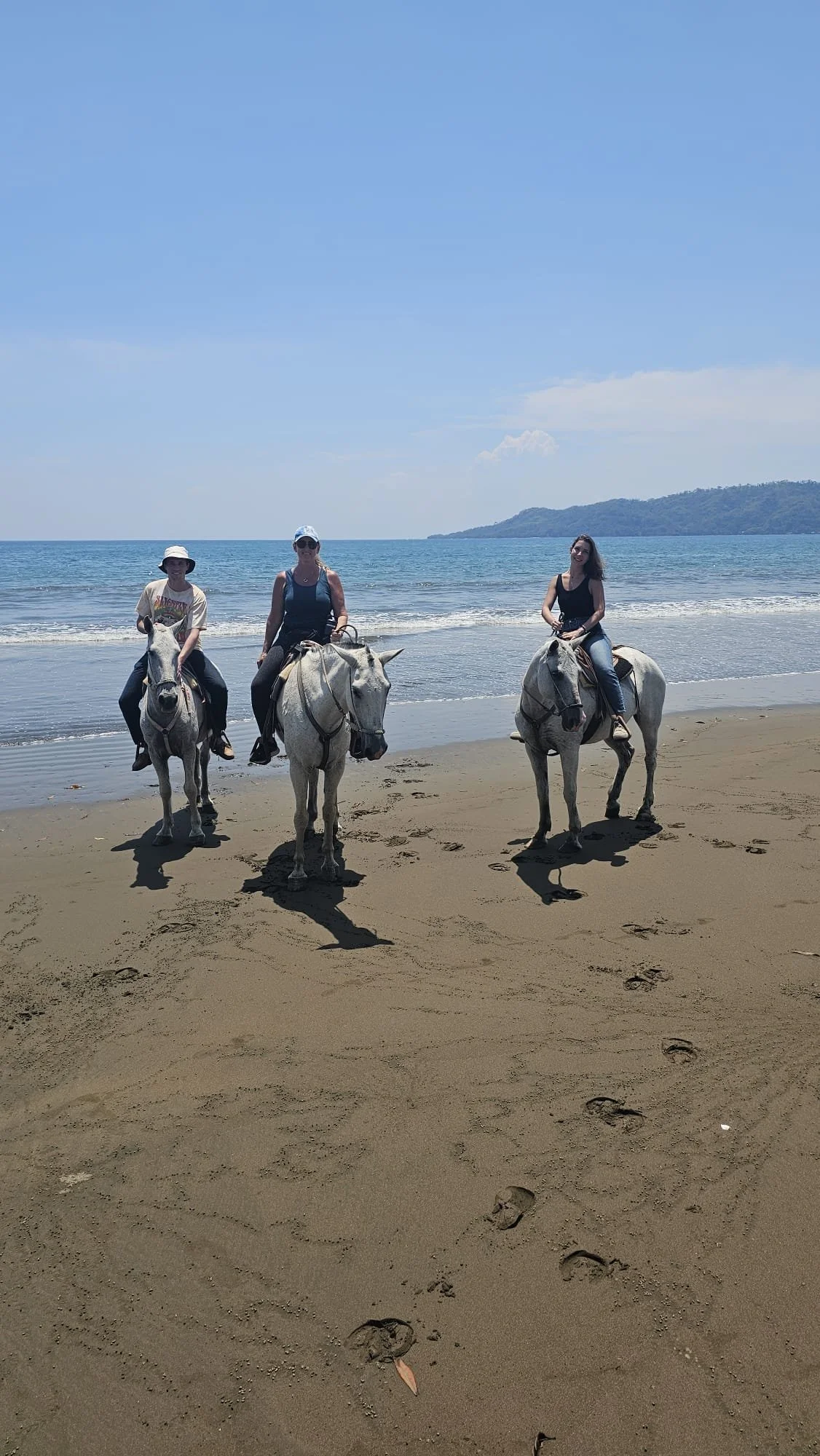
Horseback Riding
Juan’s horseback tours are a must-do. Start on the beach, ride through farmers’ fields, and book the 2-hour trip for those mountain-top views. Whether you want a slow, easy stroll or a full gallop with the wind in your hair, he matches your comfort level perfectly. My personal favourite.
-

Sport Fishing and Water Adventures
Family-owned and operating since 1990, Tavo Tours is a local favorite for getting out on the water. Their signature trips include full-day excursions to Tortuga Island, magical nighttime bioluminescence tours, and deep sea fishing charters for anglers of all experience levels.
With over three decades of local knowledge and a genuine family touch, Tavo Tours offers a personal, authentic experience you won't find with the bigger operators — at prices that make it easy to see why locals keep coming back.
-
Curú Wildlife Refuge
Tucked along the southern tip of the Nicoya Peninsula, Curú is one of Costa Rica's true hidden gems. Established in 1983 as the country's first private national wildlife refuge, this nearly 1,500-hectare property protects a stunning mix of dry tropical forest, mangroves, and secluded beaches.
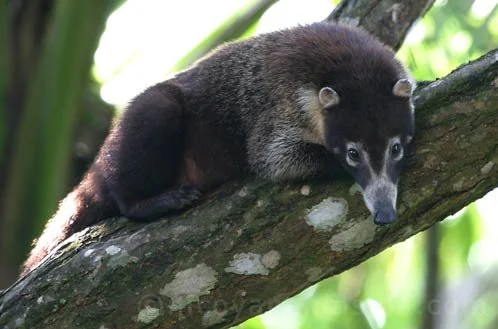
Curú is a haven for wildlife lovers, home to howler and capuchin monkeys, white-tailed deer, coatis, and even elusive ocelots and pumas, alongside hundreds of bird and reptile species. With 17 trails winding through the reserve, it's an easy, rewarding stop for hiking, birdwatching, and snorkeling in calm, protected waters.
-
Cabo Blanco National Park
Perched at the very tip of the Nicoya Peninsula, Cabo Blanco holds a special place in Costa Rica's history as the country's first protected wilderness area, established in 1963 through the efforts of conservationists Nicolás Wessberg and Karen Mogensen. Today it spans over 3,100 acres of forest and coastline, plus protected waters offshore.
The reserve is a birdwatcher's paradise, home to nearly 240 species including one of the largest colonies of brown boobies in the country, alongside frigate birds, pelicans, and ospreys. On land, keep an eye out for howler monkeys, sloths, coatis, and deer along the trails leading down to secluded, pristine beaches.
-
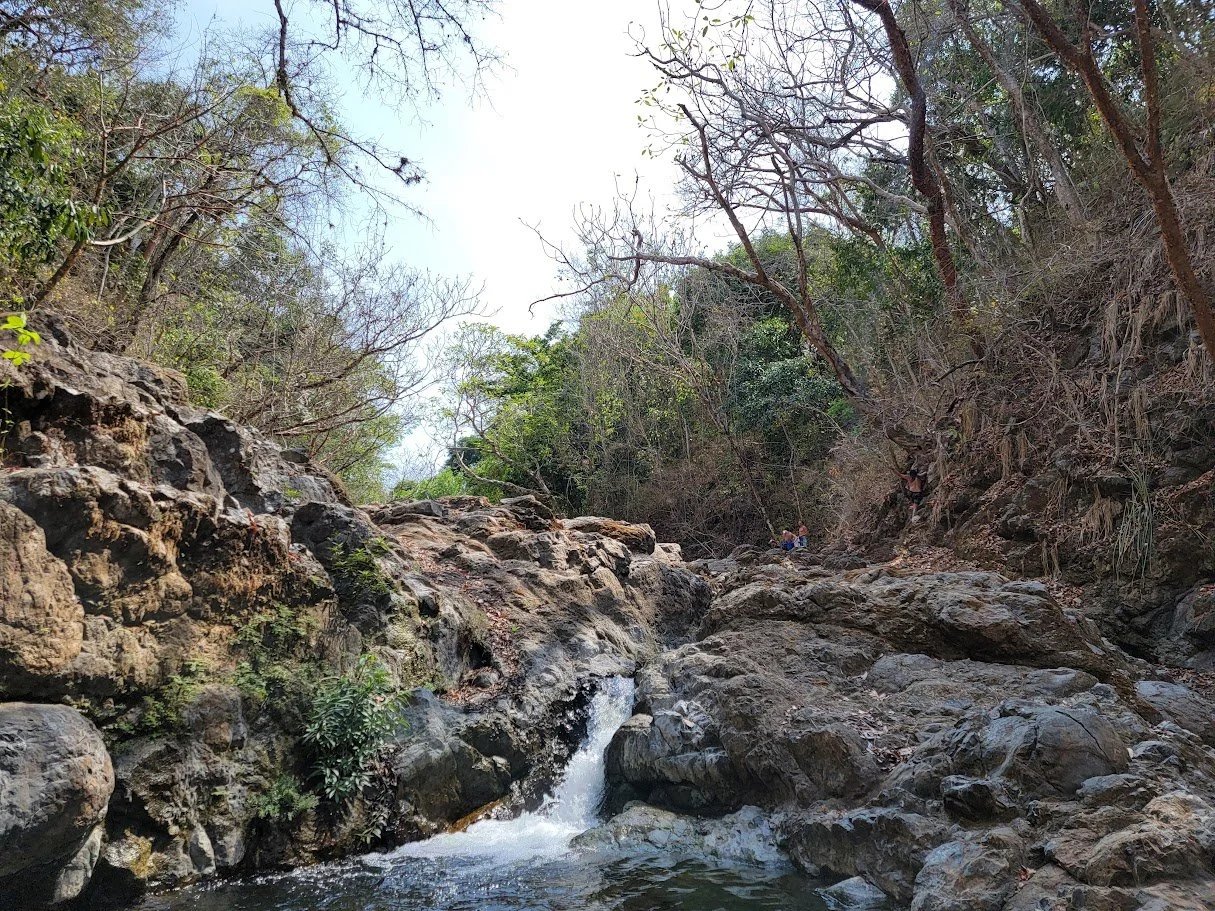
Florida Waterfalls
Tucked away on the road between Cóbano and Tambor, Pozas La Florida is one of the area's best-kept secrets — a set of gentle, cascading falls feeding into a string of clear swimming pools that most visitors never find. Unlike the more crowded Montezuma Falls, it's common to have the entire spot to yourself.
The top pool features a rope swing set higher above the water than the one at Montezuma Falls, making it a favorite for anyone looking for a bit more of a thrill. Access is through private land via a rough dirt road (best suited to a 4x4, quad, or bike), with a small local access fee paid at the house near the entrance.
A great pick for visitors who've already done Montezuma Falls and want something quieter and off the beaten path.
-
Playa Cocalito
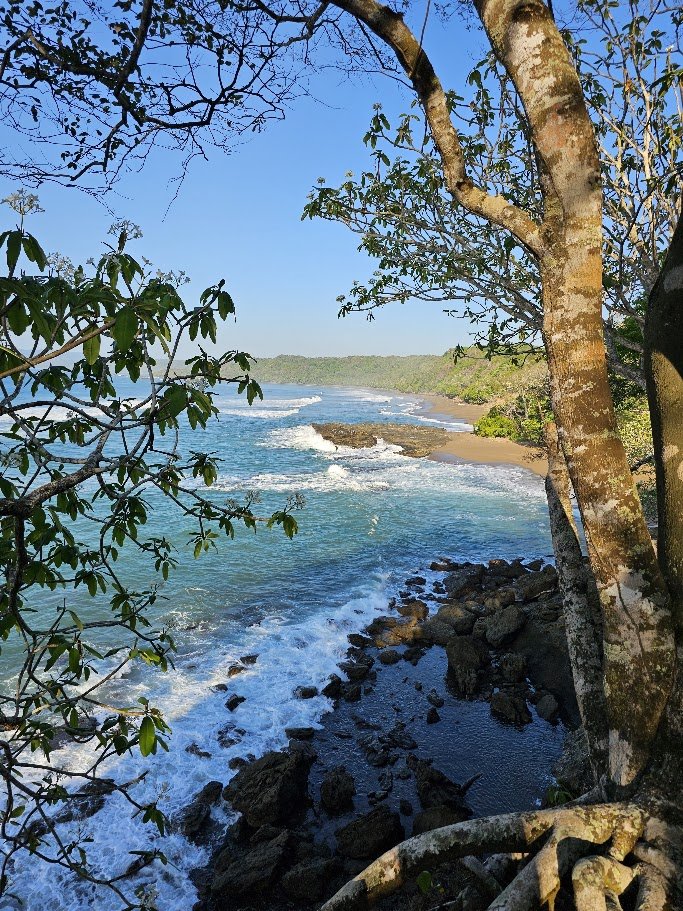
Playa Cocalito is a secluded, undeveloped beach best known for "El Chorro," a striking waterfall that tumbles straight from the cliffside into tide pools and the ocean below. It's one of the rare spots on the peninsula where fresh water and sea meet in one dramatic drop.
The beach itself is quiet and rarely crowded, with turquoise water, sea caves, and rock formations to explore. Getting there takes a bit of effort — a scenic coastal hike (tide-dependent), a horseback ride, or a shorter walk down from a parking area closer to the beach — which is part of why it stays so peaceful.
-
MONTEZUMA WATERFALLS
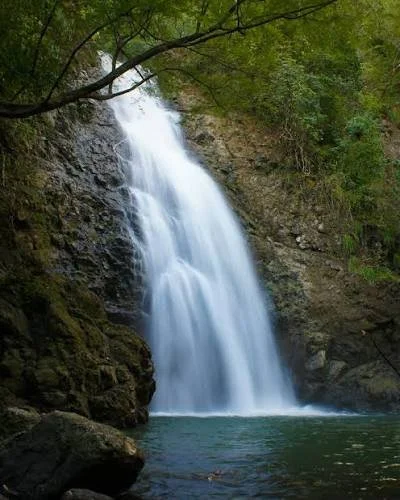
DescriptionThe most iconic natural attraction in the area, Montezuma Waterfalls is a series of three cascades tucked in the jungle. The lower falls are the tallest and most photographed, dropping roughly 80 feet into a large, clear swimming hole — a perfect spot to cool off after the hike in.
Further up, the second and third falls offer their own pools, cliff-jumping spots, and a popular rope swing for those looking for more adventure. The trail follows the riverbed and is open any time, though it's best tackled earlier in the day to avoid the hike back in the dark.
A note on safety: Jumping from the uppermost falls has caused serious injuries and even deaths over the years, and it's not something we or local guides recommend. The lower two falls offer plenty of safe swimming and jumping spots — enjoy the top waterfall for its views, not as a launch point.